Who We Are & Why Now
A perception-expanding organization.
Open World Design (OWD) exists because the way a society perceives is the way it builds. Our mission is designing a world where no human ability is wasted. We train blind/low vision people and seniors in digital literacy and work with the organizations that support them. Much has been learned from Byron Harden’s 13+ years pioneering an adaptive technology training company, I See Music LLC, serving the blind, low vision and uniquely abled community. That depth of experience and lessons inform our mission and expanded offerings. Our Institutional Lineage and Outcomes
Most People Never Question The World They Inherited.
They inherit ways of learning.
Ways of working.
Ways of designing.
Ways of belonging.
And rarely stop to ask:
What might be missing?
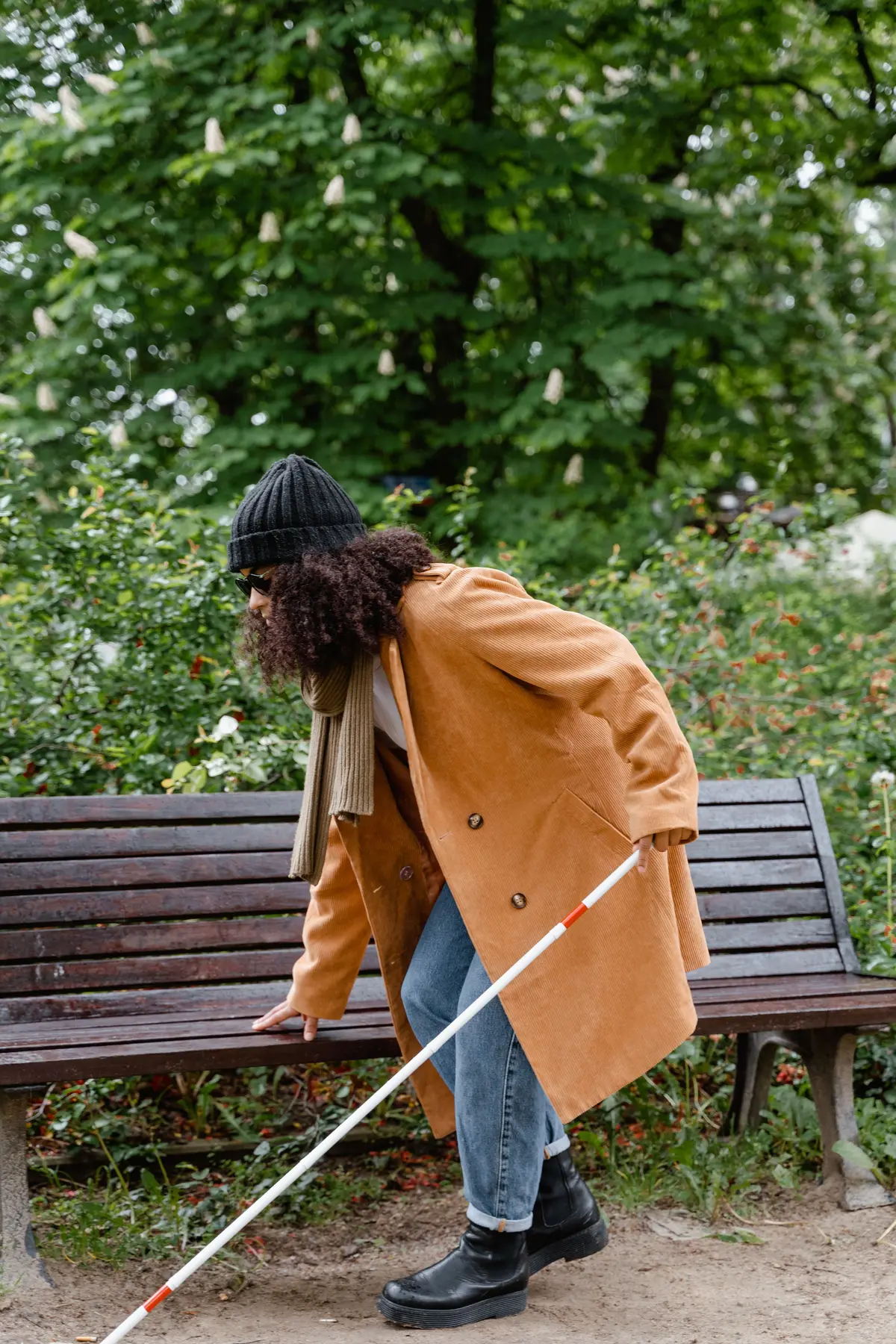
What we believe
- Accessibility is a creative practice, not a compliance line item.
- Difference in perception is a generative resource for design, art, and public life.
- Story is the fastest route from one nervous system to another.
Four Salient Values of Open World Design
Adaptive and Sensory Intelligence as Foundational Technology
The nervous system is not secondary to machines. Embodied perception is not primitive. Human adaptive and sensory intelligence is a primary technology for ethical and sustainable futures.
Continue readingShow less
The Reversal of the Deficit Narrative
Blindness and uniquely abled experiences are not framed as lack, but as specializations and mastery. The so-called “deficit” is unrecognized expertise. Sighted people become learners and partners increasing their multisensory intelligence, expanding their perception and the world.
Open World Design as Cultural Default
Accessibility is not a patch; it is the seed point. Systems must be considered for all abilities from conception. The work is not additive—it is architectural.
Belonging as Structural Design
Isolation is not a personal failing but a design flaw. The organization seeks to replace limitation with inherent participation as a cultural norm.
Why now
Adaptive technology, multisensory media, and inclusive design have reached a point where the limit is no longer capability — it is imagination and coordination. OWD's role is to convene, to teach, to publish, and to make the field's collective intelligence reachable to anyone who needs it.
Open World Design did not begin with a theory.
It began with two people noticing the distance between what society assumed—and what lived experience revealed.
Where Blind and Sighted Worlds Met
Open World Design was founded by Byron Michael Harden and Soleil Harden – husband and wife – two ‘70s kids who met at the intersection of blind and sighted worlds. They shared a mutual love and appreciation of music, creativity, and the intelligence that emerges in darkness – it speaks as much as silence. Numerous epiphanies emerged during conversations and demonstrations of how over-reliance on physical sight limits multisensory awareness and blots out essential information from people’s daily experiences and stories through sensory filtering.
Continue readingShow less
Through Byron’s innovative vision and leadership as owner and director of I See Music LLC and the I See Music Foundation, Open World Design builds upon more than twelve years of expertise in audio adaptive technology training.
Having lived as both sighted and blind—twice—Byron encountered the same obstacles repeatedly in life and business. The first was the legacy of sight-dominant perception embedded in minds, physical environments, and digital systems. The second was society’s failure to recognize the often-invisible adaptive and multisensory intelligence developed by blind and other uniquely-abled people.
Soleil Harden witnessed the distance between what people assumed about blind people’s capacities and what they could actually do. Their spatial, tactile, and auditory awareness was stunning. When she asked family members of other uniquely-abled people whether they had observed the same disconnect, the answer was repeatedly and deeply: yes.
Most people have been conditioned to perceive deficiency and disability. Yet sighted people who have never received adaptive or full sensory training may not recognize the neurological development, awareness, and expanded capacity those practices can cultivate.
Byron made that intelligence visible in everyday life. Through the feel and sound of the road, he can provide drivers with more accurate navigation throughout Chicagoland than the GPS. Family and friends have watched in amazement as he changed a tire, played multiple instruments, composed, recorded and mixed music, mic’d instruments, made perfect fluffy pancakes, changed oil and the headlight switch in a car, packed PODS, connected a trailer to a truck, cut wood with a saw, safely started and tended a fire in a fire pit, toasted a cigar without charring the tobacco, and assembled an octagonal compost bin through tactile expertise.
Yet he could not read the printed instructions included with that bin. Most mail does not arrive in Braille. An inaccessible online bank account places routine financial information beyond his reach. There are a host of other hurdles, from household appliances to software. One of the greatest challenges and roadblocks is navigating business with closed minds.
The contradiction was clear: the limitation was not his intelligence or ability. It was the design.
Soleil also observed that Byron and other blind people often noticed far more multisensory information than sight-dominant people, who routinely filter out sounds, textures, spatial relationships, and other inputs. Blindness was revealing blind spots in awareness, presence, and design.
The quiet part out loud is a deeper cultural and civilizational wound: nyctophobia.
Our fear of darkness—as danger, ignorance, absence, and loss—extends to blindness. The loss of physical sight is often imagined as a plunge into a void or never-ending absence. Blindness unsettles sight-dominant culture but, when understood, it reveals how much intelligence operates without light.
For more than a decade, Byron’s vigorous advocacy for blind people’s vocational and educational goals illuminated the blind spots in our systems and collective imagination.
Together, the founders recognized the need to expand upon the work begun through I See Music:
- Blind and low-vision people and seniors needed greater digital-literacy support.
- Blind and uniquely-abled people were operating with adaptive and multisensory intelligence that society had not learned to recognize or value.
- And those forms of intelligence could expand the perception and capacities of sighted people while improving the systems, technologies, environments, and experiences we all share.
Applied to design, these insights create a more open world.
That recognition became Open World Design.
From Recognition to Action
Those shared recognitions became a framework for action. Open World Design works across two connected horizons:
- Horizon One — Participation
- Horizon Two — Possibility
Horizon One addresses participation in the world as it exists. Horizon Two explores and designs what becomes possible next.
Join the Open World
Open World Design is an invitation to learn, collaborate, contribute, and participate. Enter through the path that meets you, and help shape a world where no human ability is wasted.